
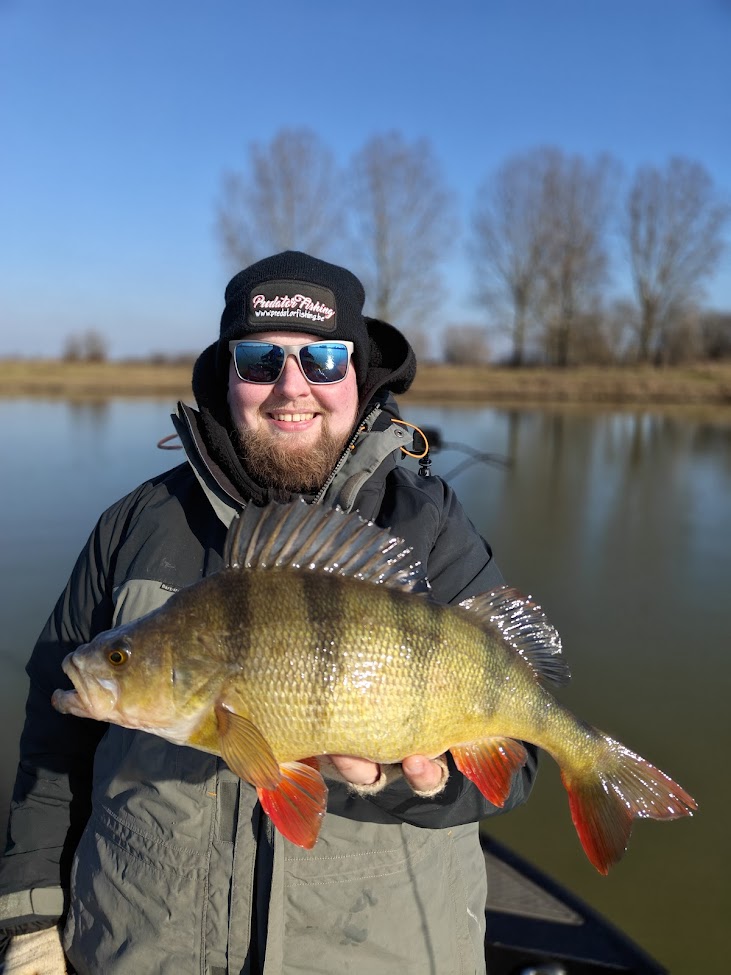
Big perch fishing: one year hunting record perch
Fishing for big perch on the vast Dutch waters is no fluke. It takes knowledge, patience, technology and above all an enormous amount of time on the water. In this video we take you along on a full year’s hunt for truly big perch, from freezing winter mornings to windless days when everything finally comes together.
What started as frustration during competitions grew into a focused mission: to understand where big perch hold up, how they react to different techniques, and what it really takes to catch that one fish of a lifetime.
Why big perch fishing is a completely different game
For years our focus was mainly on zander. Pelagic fishing, actively scanning, following individual fish on sonar and reacting to behaviour underwater: that was our world. But during the Predator Tour, reality hit us hard. We could catch zander. Perch was a whole different story.
That’s exactly where this quest began.
Big perch won’t let themselves be caught easily. Especially on big water, it’s often subtle differences that determine the result. Think of a tiny change in structure, a specific depth, a short feeding spike, or an exact cast onto a mussel bed or rock pile. A difference of one metre can be the line between nothing and a bite.
Finding big perch starts with reading maps
Anyone who wants to catch big perch on waters like the Haringvliet or Volkerak first has to understand how such a body of water is put together. Digital maps and contour lines are essential for that.
Steep drop-offs, deep channels, ridges and hard transitions are typical zones where big perch can hold up. Especially in the colder months, deeper structures often offer more stability in temperature and conditions. That makes them extra interesting for fish looking to save energy while opportunistically feeding on passing baitfish.
Big perch fishing starts with map study. Instead of just covering water at random, you look for logical key zones:
- harbour entrances
- holes
- rock piles
- mussel beds
- hard ridges
- transitions from deep to shallow
That’s often the foundation of successful big-water perch fishing.
Sonar and LiveScope make the difference
Besides map study, sonar played a crucial role during this year-long hunt. Side imaging helped us outline structures, recognise subtle objects on the bottom, and find zones where fish might be holding. But it was LiveScope in particular that gave extra insight.
By fishing for big perch with sonar and LiveScope, we could not only locate fish but also read their behaviour. Were they following the lure? Did they hang back? Did they turn away? Did they react aggressively or completely passively?
That kind of information massively speeds up the learning process. You’re no longer fishing blind; you see in real time what’s happening underwater. Especially on waters where big perch sometimes hold up in very small spots, such as a small mussel bed or a limited rock pile, that’s a huge advantage.
In such situations, precision counts. Cast one or two metres off the zone, and you often get no reaction. Land exactly on the spot, and everything can suddenly happen.
How we learned from top anglers and specialists
During this quest we also spoke to experienced anglers and specialists who have been focused on big perch for years. A few clear patterns emerged from those conversations.
First: big perch often requires a slower approach than many anglers think. Especially in cold water, finesse techniques such as a Ned rig, Carolina rig or light creature baits are particularly effective when presented slowly and in a controlled way.
Second: timing is hugely important. Several experienced anglers pointed to late winter and early spring as the top period for truly big fish. February and March remain classically strong months for anyone targeting record size.
Third: conditions make a big difference. Wind, light, visibility, water temperature and fishing pressure together determine how and where you should fish. Catching big perch is rarely purely technical. It’s often a combination of pattern recognition and a feel for when to speed up, slow down, or switch technique.
The best techniques for big perch on big water
Which techniques work for big perch fishing? During this project we tested various techniques on multiple waters and under a wide range of conditions. The most important ones were the Carolina rig, Ned rig and twitchbait.
Carolina rig and Ned rig for a slow finesse approach
On days when fish were passive, finesse approaches often proved the most logical choice. Especially when big perch were holding deep or showed little willingness to actively follow a lure, slow presentations could still make the difference.
The Carolina rig is strong here because it gives you a lot of control and lets you fish very slowly without sacrificing finesse. The Ned rig also remains a classic when you want to tempt fish sitting tight against the bottom.
Twitchbait for reaction bites
Still, in many sessions the twitchbait proved the absolute key. Especially on waters with heavy fishing pressure, or when perch were actively hunting baitfish, a twitchbait triggered far more reaction than a finesse rig.
The big advantage of a twitchbait is that you can trigger fish. By moving the lure erratically and occasionally building in a pause, you create exactly the combination of irritation and opportunity that big perch often react to.
On LiveScope we repeatedly saw fish follow the lure, hang back, and then strike right during the pause. That confirmed what we already suspected: sometimes you shouldn’t fish more subtly, but rather just aggressively enough to trigger a reaction.
Micro-positioning: the real key to success
One of the most important lessons from this quest was without doubt the importance of micro-positioning. Big perch on big water are far from always spread out. They’re often found in extremely small zones within a much larger whole.
Think of:
- a small patch of rock at a harbour entrance
- a limited mussel bed
- a hard transition on an otherwise dull bottom
- a tiny change in depth
- a sheltered corner with baitfish
Especially on heavily fished waters, you often need to think not in kilometres of water, but in metres. That requires a completely different mindset. Less “searching broadly”, more “reading precisely what’s happening underwater”.
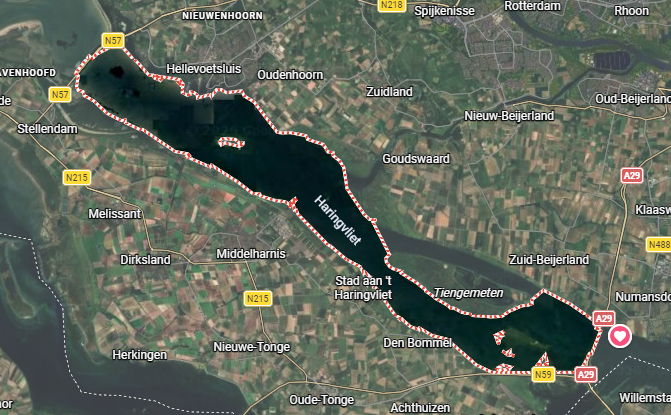
Haringvliet: big water, big chances, tough conditions
Big perch fishing on the Haringvliet and Volkerak: the Haringvliet played a central role in this year-long hunt. It’s an enormous body of water with immense potential, but at the same time one that punishes you mercilessly if you don’t fish efficiently.
Wind, fog and limited time on the water often made it difficult to fish all the zones we wanted to check. On waters like this, you have to make choices. Sometimes a hard northeaster forces you to stay on one side of the lake. Sometimes dense fog limits you to safe zones close to the harbour.
Still, we learned a lot there too. Big perch on the Haringvliet seem strongly tied to structure, baitfish and temporary activity spikes. It’s not a water where you can just cruise around. You have to work there deliberately, with maps, electronics and a clear plan.
Volkerak: impressive water, but tough perch fishing
The Volkerak also featured in this quest. That water is known for its big pike, but is home to an enormous number of perch as well. Only that doesn’t mean they’re easy to catch.
During our sessions there, we noticed how tough perch fishing on the Volkerak can be. Deep drop-offs, open water, cold conditions and plenty of pike made it difficult to fish specifically for big perch. Multiple times our lures were intercepted by pike before perch even got a chance.
That’s part of it too. Not every session delivers confirmation. Sometimes a water mainly delivers lessons, not a record fish.
What we learned about the behaviour of big perch
After a year of testing, observing and adapting, a few patterns clearly recurred.
Big perch:
- often hold up near structure
- use small, hard zones as ambush points
- don’t react to finesse every day
- can sometimes trigger better on a twitchbait
- often require extremely precise casts
- are strongly influenced by season and conditions
What stood out most was that the biggest fish are far from always the easiest. Sometimes an entire school actively follows, but that one bigger fish holds back. At other times, it’s precisely the slowest or most passive fish that ultimately strikes.
Competitions, experiences and the bigger picture
Throughout the year, focus also temporarily shifted to competitions such as the Predator Tour, World Predator Classic and World Predator League. We learned a lot there too, although it didn’t immediately produce the ultimate monster perch we were hoping for.
Still, that part of the journey was valuable as well. Tournament fishing sharpens your decisions, teaches you to recognise patterns faster, and forces you to fish efficiently under pressure. On top of that, we shared the boat with plenty of passionate anglers, which again brought new insights and an even broader view of big-water perch fishing.
Catching big perch takes time, trust and precision
If this video makes one thing clear, it’s that catching big perch is not a matter of luck. Of course you need momentum. Of course conditions sometimes have to align. But ultimately it comes down to repetition, analysis, adaptation and trust in your approach.
Reading maps, using sonar smartly, alternating techniques, positioning exactly and continuing to learn from every session: that’s what makes the difference over time.
The real monster perch remained just out of reach in this film. But that’s exactly what makes this hunt so addictive. Because once you understand how many pieces of the puzzle have to align, you also know that one fish will come, eventually.
Watch the full video
In this film you see how, over the course of a full year, we refined our approach on the biggest Dutch waters, together with experienced anglers and with a strong focus on map study, sonar, techniques and fish behaviour.
Watch the full video and discover how we approached our quest for big perch.
Looking for the right gear for big-water perch?
Anyone serious about big-water perch fishing knows how important reliable electronics, good rods and well thought-out accessories are. In our webshop you’ll find the gear we ourselves use on the water every day.
Check out our range in:
- marine electronics
- sonar solutions
- rods for finesse and twitchbait fishing
- accessories for targeted predator fishing