
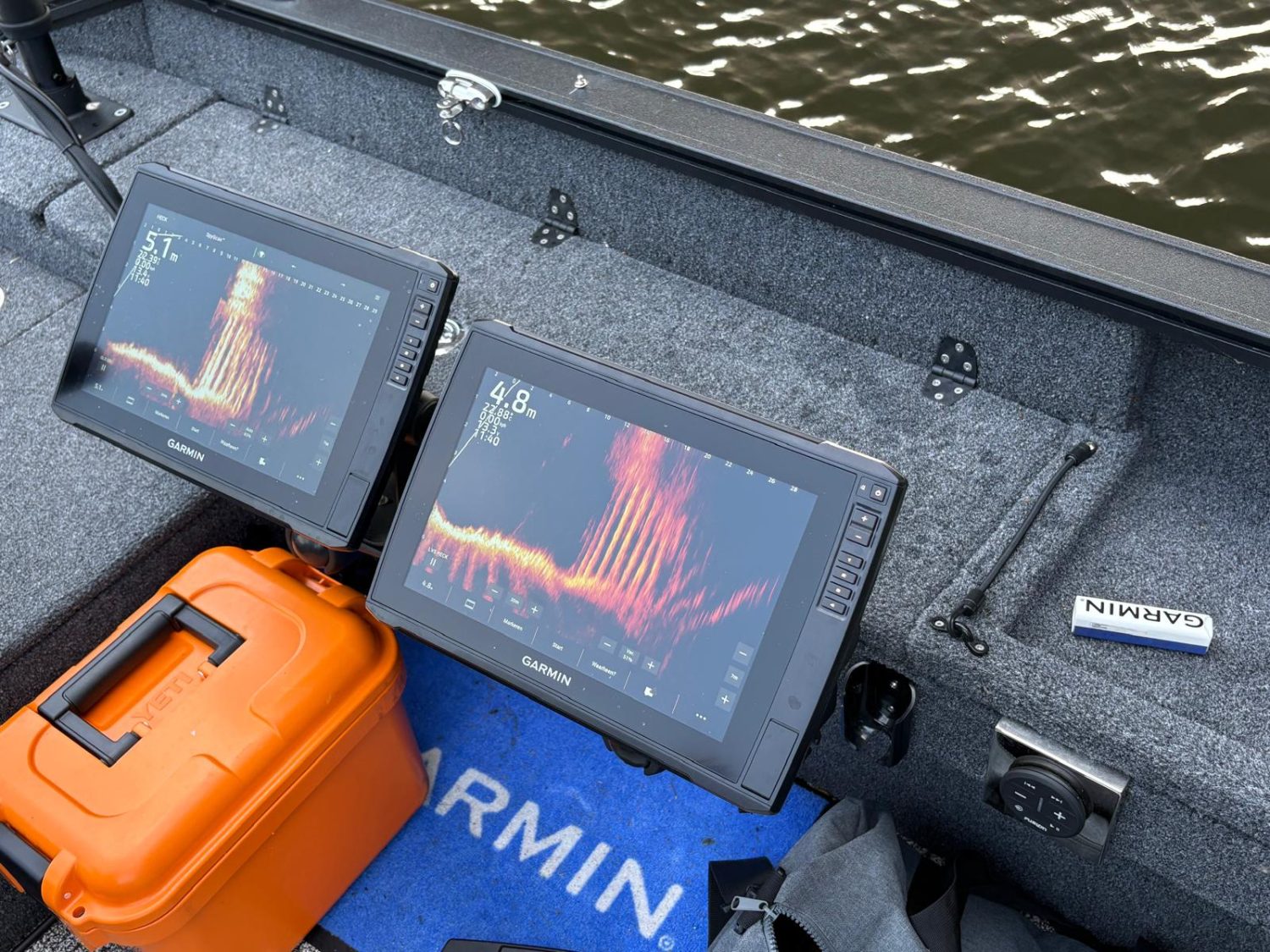
LiveScope 2: LVS42HD or LVS44? The difference explained
Garmin announced the LiveScope 2 series on July 7, 2026. And immediately the question we’ve gotten most often ever since came up: why are there two models, and which one should I get?
Short answer: the LVS42HD sees sharper up close, the LVS44 sees further. You choose based on how far, on average, you fish from your transducer.
Below is the full explanation.
First, a quick word on naming
The names are confusing, and that’s not your fault.
- LiveScope 2 HD is called the LVS42HD
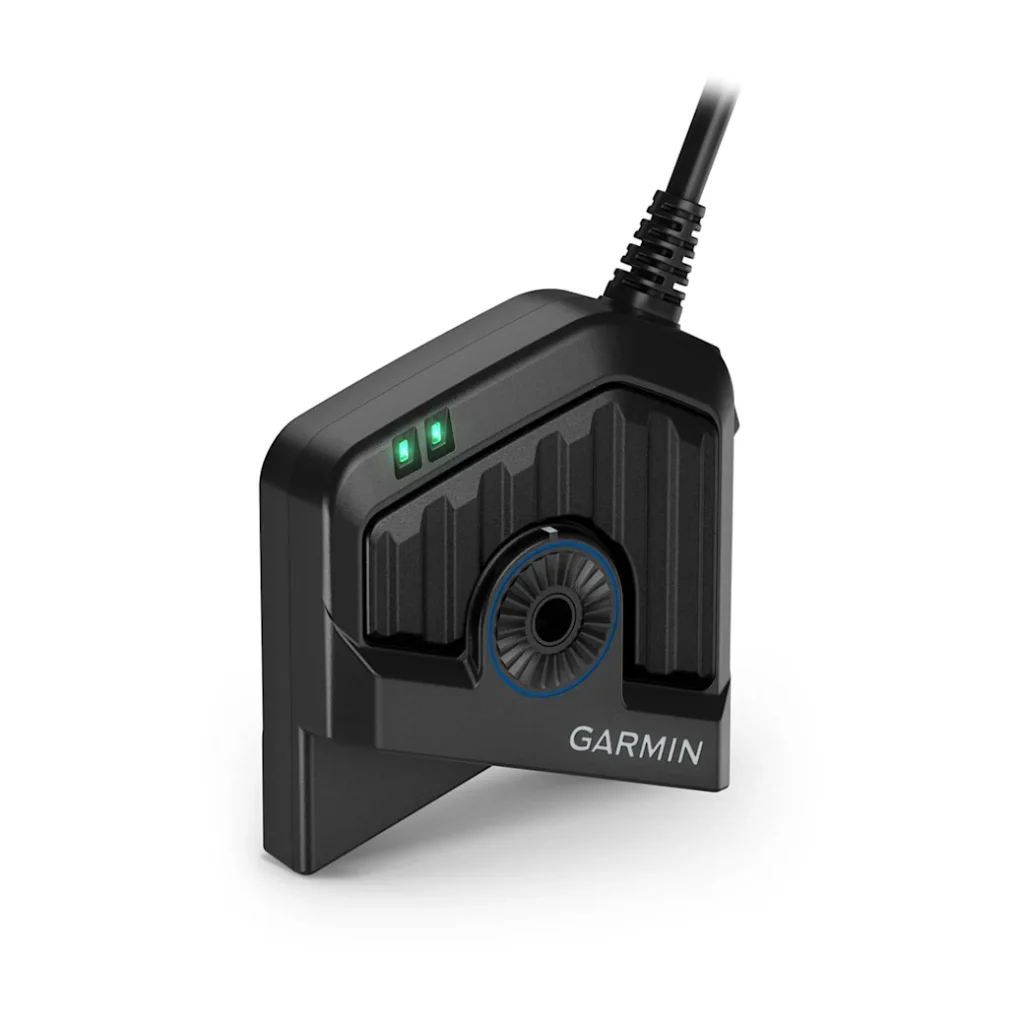
- LiveScope 2 is called the LVS44
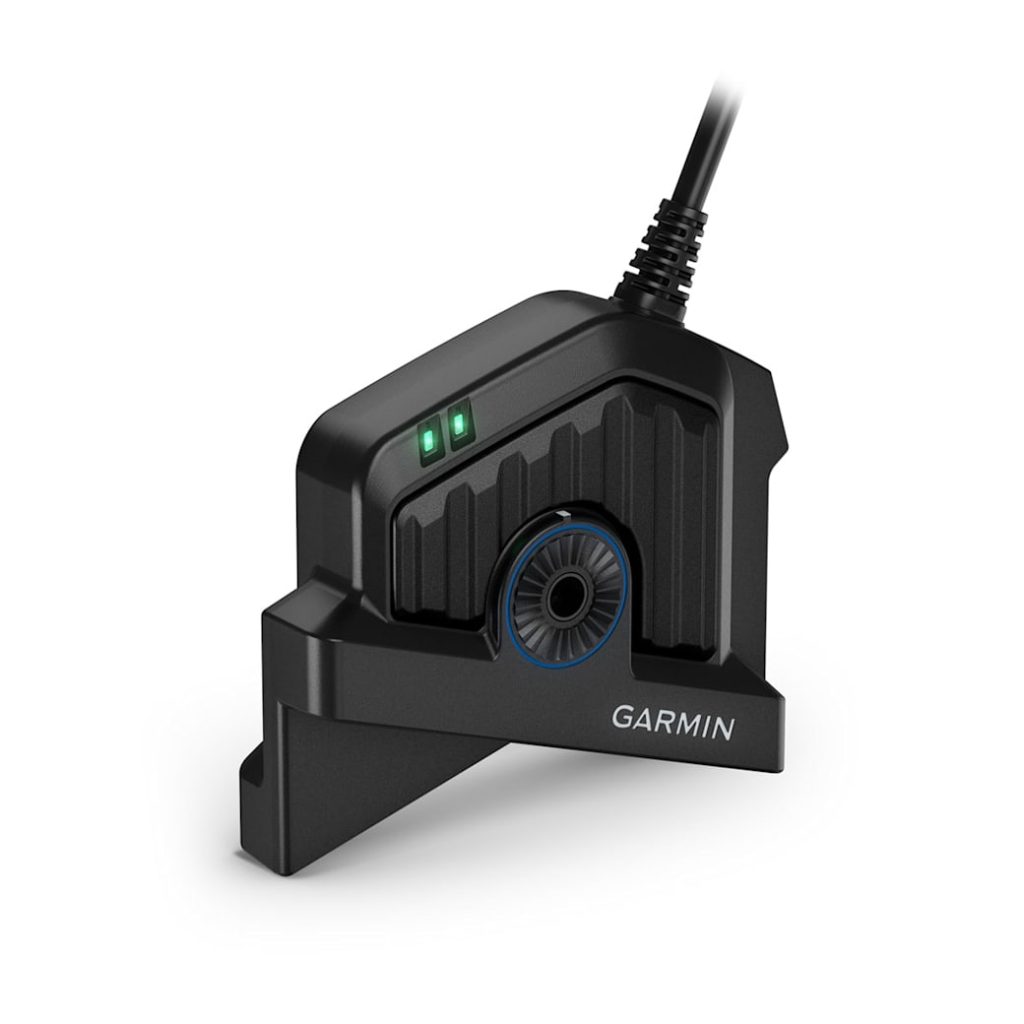
So the higher number is not the “better” model. They’re both new, they both use the same new technology, and they’re built for different applications. “HD” refers to the higher level of detail, not a higher tier.
The biggest change applies to both: the black box disappears
This is the change that makes the most practical difference, regardless of which model you choose.
Where earlier LiveScope systems needed a separate sonar box, the LVS42HD and the LVS44 connect directly to a compatible Garmin chartplotter and a power source. The GLS 10 black box is no longer needed.
That means simpler installation, less space taken up, and less cabling on board — which matters most on smaller boats, bellyboats and kayaks where every centimetre counts.
For the Belgian market, that’s probably the most important point of the whole story. We rarely fish from big bass boats. One less cable and no more box that needs to be mounted somewhere dry and secure is a real advantage here.
LVS42HD — maximum detail up close
The LiveScope 2 HD is optimized for casting distances up to 125 feet, or roughly 38 metres, and according to Garmin delivers up to 50% more detail at short range than the previous generation.
It runs on a higher frequency band than earlier LiveScope transducers — 850 to 1,600 kHz — and Garmin specifies target separation of 3.8 inches at 30 feet. Converted: roughly 10 centimetres of separation at about 9 metres away.
That figure matters more than it sounds. Target separation determines whether two fish standing close together show up as two distinct marks or blur into a single blob. It’s the difference between being able to count how many fish are in a school, and only being able to see that there’s a school there.
The trade-off is range: the LVS42HD is specified up to 125 feet, and that’s a real ceiling — it’s precisely the reason Garmin sells two models instead of one.
Who it’s for: anglers who want to track their lure, distinguish individual fish within a school, and work within casting range. So: vertical fishing, dropshotting, targeting structure.
LVS44 — more range
The LiveScope 2 builds on LiveScope Plus technology and delivers 20% more resolution and 25% more range — up to 250 feet, roughly 76 metres — for anyone who wants to search more water and locate fish further from the boat.
You lose some detail at short range, but you see twice as far.
Who it’s for: large waters, search fishing, locating fish before running to them. Deep water where you need to search vertically over longer distances.
What both models have in common
Both transducers have built-in image stabilization, an automatic shutoff when the transducer comes out of the water, water temperature sensing, and multiple mounting options.
That water sensor, which automatically switches off the sonar as soon as the transducer is lifted out, is built in. A small feature, but it protects your transducer from running dry — a classic and expensive mistake.
There’s also a LiveScope 2 HD Ice Fishing transducer with a shorter, flexible cold-water cable and a combined power-and-network cable, supplied with a 0-degree shaft mount. Less relevant in Belgium, but good to know if you fish in Scandinavia.
In one table
| LVS42HD (LiveScope 2 HD) | LVS44 (LiveScope 2) | |
|---|---|---|
| Strength | Maximum detail up close | Maximum range |
| Range | approx. 38 m | approx. 76 m |
| Frequency | 850–1,600 kHz | higher range, lower band |
| Target separation | approx. 10 cm at approx. 9 m | — |
| Black box needed | No | No |
| Typical use | Vertical, dropshot, tracking a lure | Search fishing, large water |
Which one should you get?
Do you fish canals, smaller lakes and gravel pits, and target structure within casting range? Then the LVS42HD is the logical choice. A 38-metre range is rarely a limitation on our waters, and you’ll notice the extra detail every day.
Do you fish large waters — the Meuse, big lakes, Scandinavia — and do you search for fish before you start fishing? Then the LVS44 makes more sense.
For most Belgian predator anglers, the LVS42HD is probably the better model. We rarely fish at 70 metres from the boat, and the gain in target separation is exactly what zander and perch anglers benefit from.
Is it worth upgrading from an LVS34?
If your current setup works well and you mostly fish within a reasonable range: the image gets better, but your LVS34 still catches fish.
If you really want the best image on the market, we’d recommend replacing the LVS34 with the LVS44.
For someone who mainly fishes pelagic or vertically, the LVS42 is a genuine upgrade over the LVS34.
Not sure? Let us know which screen and which transducer you currently have, and we’ll take a look with you.